Sometimes the lines between drafts
can be a little fuzzy, but often there are still stages dictated by time, level
of writing/editing, and completeness. I recently wrote a paper for my American
Literature class that had very distinct stages of drafting. The first draft was preceded by a search for sources, which really solidified my topic and the direction I wanted to go with this information. I found a news broadcast and split my screen so I could watch it and make notes on a word document at the same time. These notes were bullet points with topics and time stamps so I could find a section again later, unstructured paragraphs where I word-vomited about something from the video that I could connect to the book, and comments about things to look for as I watched. I got about halfway and had
to stop, but came back later and finished in a similar fashion. Right after
finishing the video, I went back through what I’d written and started dragging bullet points and sentences around to collect similar points, or evidence that could be used for
the same argument. I came back to it the next day and added quotes from the broadcast or weeding out sections that were
becoming irrelevant to my purpose in the paper. And I wrote. A lot.
After all of that, it was about time to get some space from my work, so I did. I think of these as my first three drafts, and each one added something different that moved my paper into a new stage of drafting. These steps became essential to my finished product.
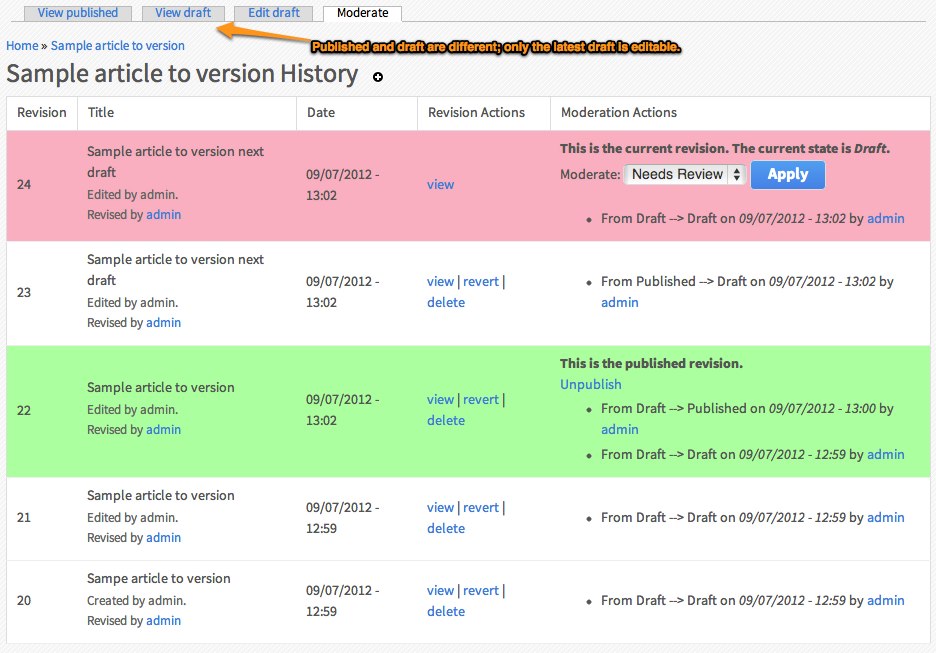
There is no rule about how many drafts a piece should go through before it's ready to be published, and I wouldn't necessarily make students turn in that many drafts, but it might be important for them to understand that it's a multi-step process. Even final drafts leave good writers with things to improve. As discussed in my previous post, drafting and revision helps writers make next-level changes in their work. I chose this graphic because it shows what version (or revision) histories in most online or document sources look like, and also for two key descriptions, "published revision" and "current state is Draft" that reflect two steps of the writing process.
That was the most confident I’d felt about a paper in a while, due in large part because I had taken adequate time to write a paper that was ‘ready to publish’. I learned a lot about myself as a writer through that experience, and it gave me a fresh perspective as I began to make plans for guiding my future students through the writing process. Finally, I wasn't terrified to finish or receive feedback because of the drafting and revision that I had done. In grading, my professor found a few small mistakes, but he also made several positive comments about my topic, arguments, and prose. I was very proud to receive that feedback, including compliments I felt I had earned through my hard work.
Hearkening back to my first bad example, you can see that it lacked many of the steps that this essay took to be successful. It showcased almost no drafting, revision, or peer feedback. I wrote both too much and too little, leaving out key supporting facts and holding on to well-written sentences that had become obsolete as my argument developed. When I was done writing (not to say that the writing was done) I wasn't ready to publish. Writing is an act of creation, which makes it personal, and it's for that reason that we as teachers and writers need to develop and apply good drafting and revision techniques.
And remember to celebrate the small steps.
After all of that, it was about time to get some space from my work, so I did. I think of these as my first three drafts, and each one added something different that moved my paper into a new stage of drafting. These steps became essential to my finished product.
 |
| Drupal |
Going through the revision process with a peer is another tool writers should use to take their writing to the next level. An essential part of the writing process for me is reading through or talking through with another person. In addition to fixing issues that would've gone unnoticed by my eyes alone. Now is a good time to bring back my current philosophy, “Always return before you want to.”
Coming back to my essay with my trusty sidekick, my sister and I (pro
tip: always live with an editor) went through my essay, fixing weird grammar
things, making sure that my thesis was supported throughout, developing a
better introduction and conclusion (addressing my biggest weaknesses), and reading the whole thing out loud. Since the paper was due the next day, I sent the file to myself so I
could read through and tweak it again between classes, print it out, and turn it in.That was the most confident I’d felt about a paper in a while, due in large part because I had taken adequate time to write a paper that was ‘ready to publish’. I learned a lot about myself as a writer through that experience, and it gave me a fresh perspective as I began to make plans for guiding my future students through the writing process. Finally, I wasn't terrified to finish or receive feedback because of the drafting and revision that I had done. In grading, my professor found a few small mistakes, but he also made several positive comments about my topic, arguments, and prose. I was very proud to receive that feedback, including compliments I felt I had earned through my hard work.
Hearkening back to my first bad example, you can see that it lacked many of the steps that this essay took to be successful. It showcased almost no drafting, revision, or peer feedback. I wrote both too much and too little, leaving out key supporting facts and holding on to well-written sentences that had become obsolete as my argument developed. When I was done writing (not to say that the writing was done) I wasn't ready to publish. Writing is an act of creation, which makes it personal, and it's for that reason that we as teachers and writers need to develop and apply good drafting and revision techniques.
And remember to celebrate the small steps.
 |
| PHD Comics |
Comments
Post a Comment