
Drafting can be a bare-boned skeleton, waiting to get dressed/fleshed up. Drafting can be a branch of a tree, whittled down to a match stick. Some people write a lot, and edit down. Others write the bare essentials and beef it up. Drafts can be ugly and messy and flawed, because we know that’s not going to be it’s final form. Is this what we're reminding students (and ourselves)?
Here's some feedback about drafting from the teachers of Hyde Park MS:
"Drafting... helps to get your ideas down without the stress of it needing to be perfect.”
"Drafting during the writing process allows a writer to plan out their writing...it is the blueprint for the final copy."
"[Drafting organizes] one's thoughts/ideas."
Here's some feedback about drafting from the teachers of Hyde Park MS:
"Drafting... helps to get your ideas down without the stress of it needing to be perfect.”
"Drafting during the writing process allows a writer to plan out their writing...it is the blueprint for the final copy."
"[Drafting organizes] one's thoughts/ideas."
 |
| "It’s Only A Rough Draft" 1 Simple Thing |
 |
| OWL Excelsior |
 |
| An Author's review of Grammarly |
 |
| via Katie Rose |
 |
| The dreaded red squiggly line |
There is no standard number of drafts that a piece might go through before it's ready to be published, but between each one comes a period of revision that's necessary for the piece to progress.
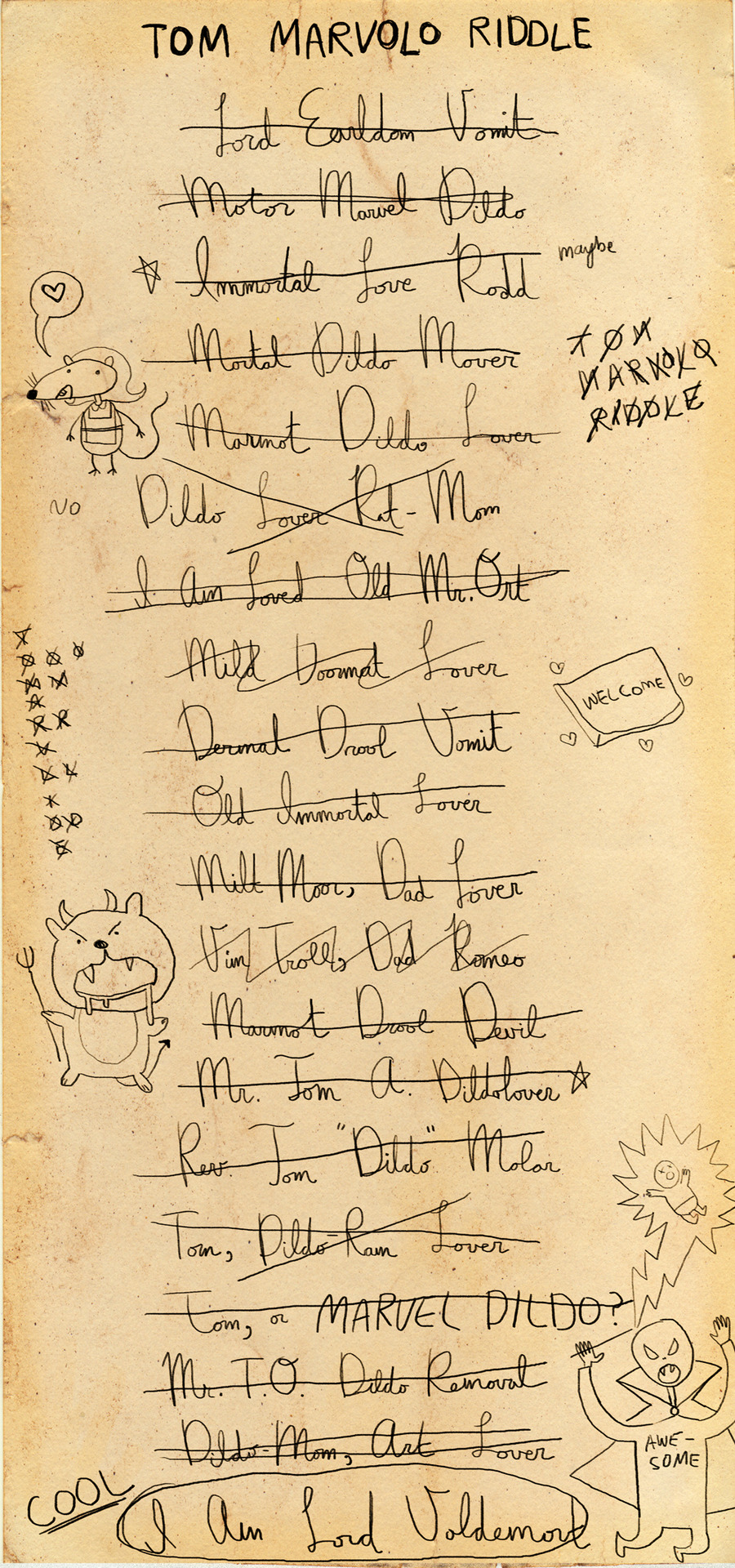
To end on a more lighthearted note, it's important to realize that there are many ways to approach and solve a problem, make changes, or rewrite a paper. In this image, fictional character Tom Riddle attempts to make anagrams out of his name. We can see that some of the phrases he came up with are better than others, but all fulfill the purpose of an anagram (for him: to include the letters of his name, for us: to be entertained). Certain words continue to appear throughout his attempts, and he takes notes and draws pictures in the margins that can help illustrate the text, or at least his feelings about the text. He starred one attempt that he felt showed promise, but his final decision is circled at the bottom, with an annotation next to it: COOL. While we hope our students have deeper and more relevant comments about their own drafts, it's good to acknowledge drafting and revision of all shapes and sizes.
Comments
Post a Comment